
 Pocket
Sedona, Arizona
Tri Color American Bully for Sale
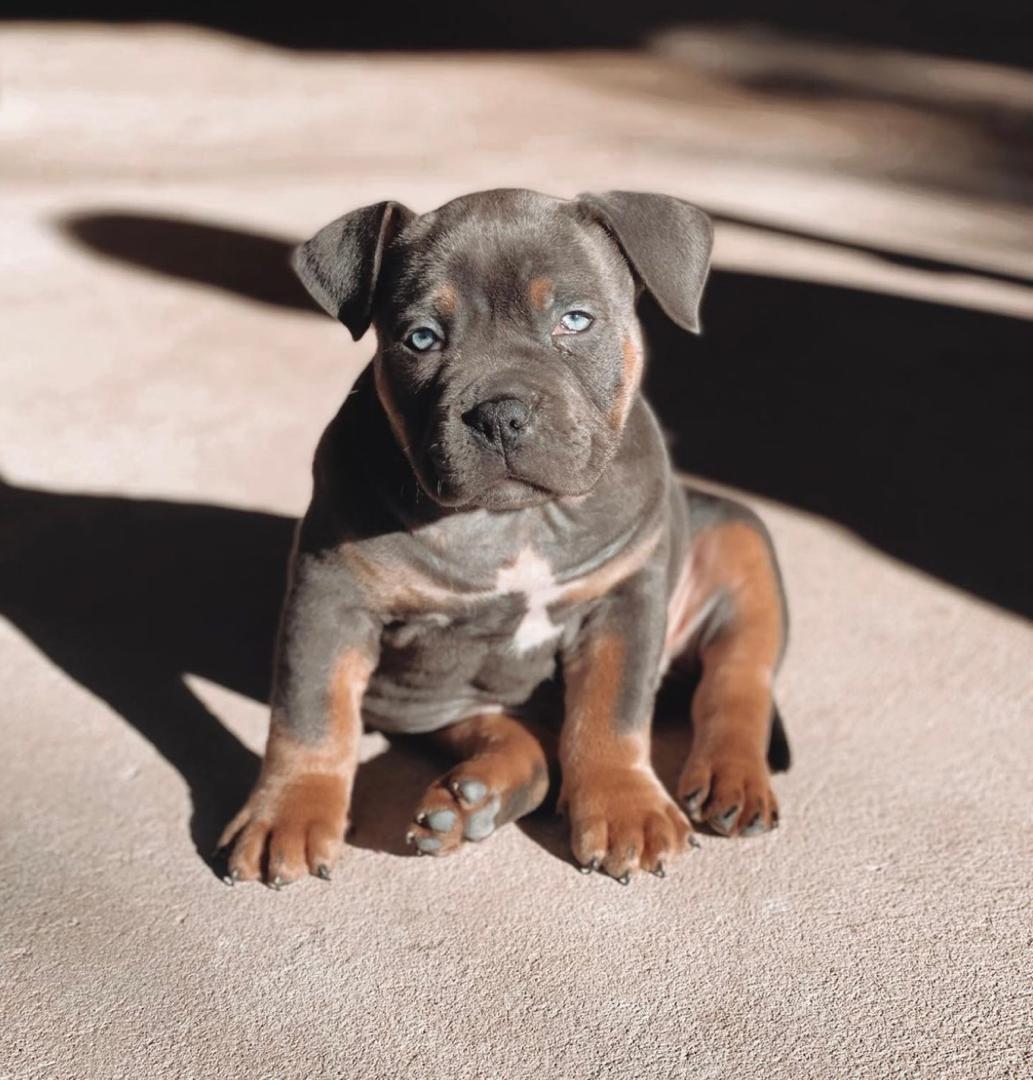
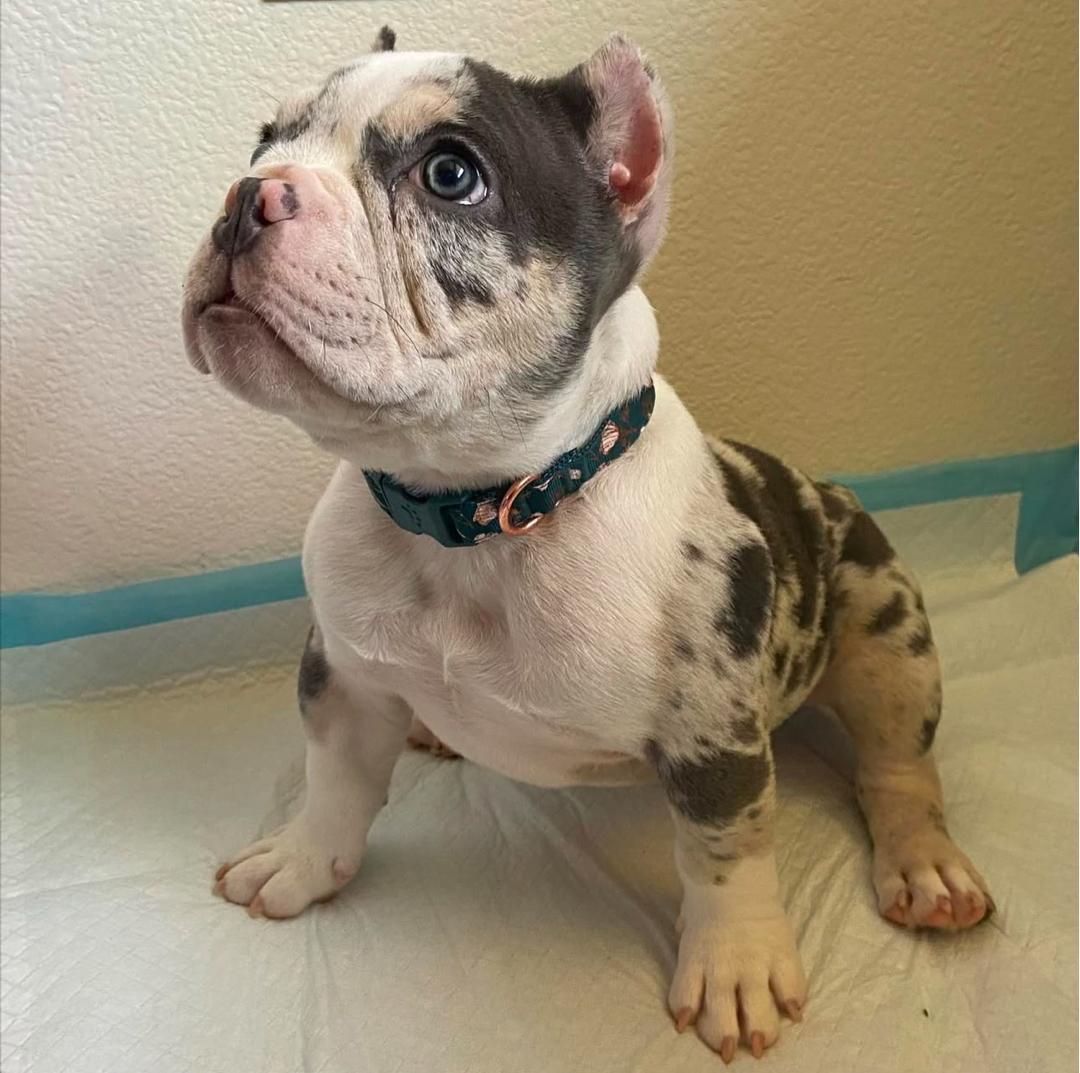
2 tri color puppies are standing with me in Sedona right now, raised in the house and seen by my vet before they go home.
Yes, there are 2 tri color American Bully puppies for sale here today. The coat is uncommon in the breed, and the first thing worth saying is that scarcity and quality are two separate measurements. I’m Greg Harpson, I’ve bred American Bullies here since 2015, and coat is the last thing I select for, well behind temperament and behind structure.
The tri color puppies standing with me now
These are the only tri color puppies in the group as it stands, so what you see is the whole of it. Each one has been looked over by my vet before they travel, with the dates written down for you to keep.
Pocket
 XL
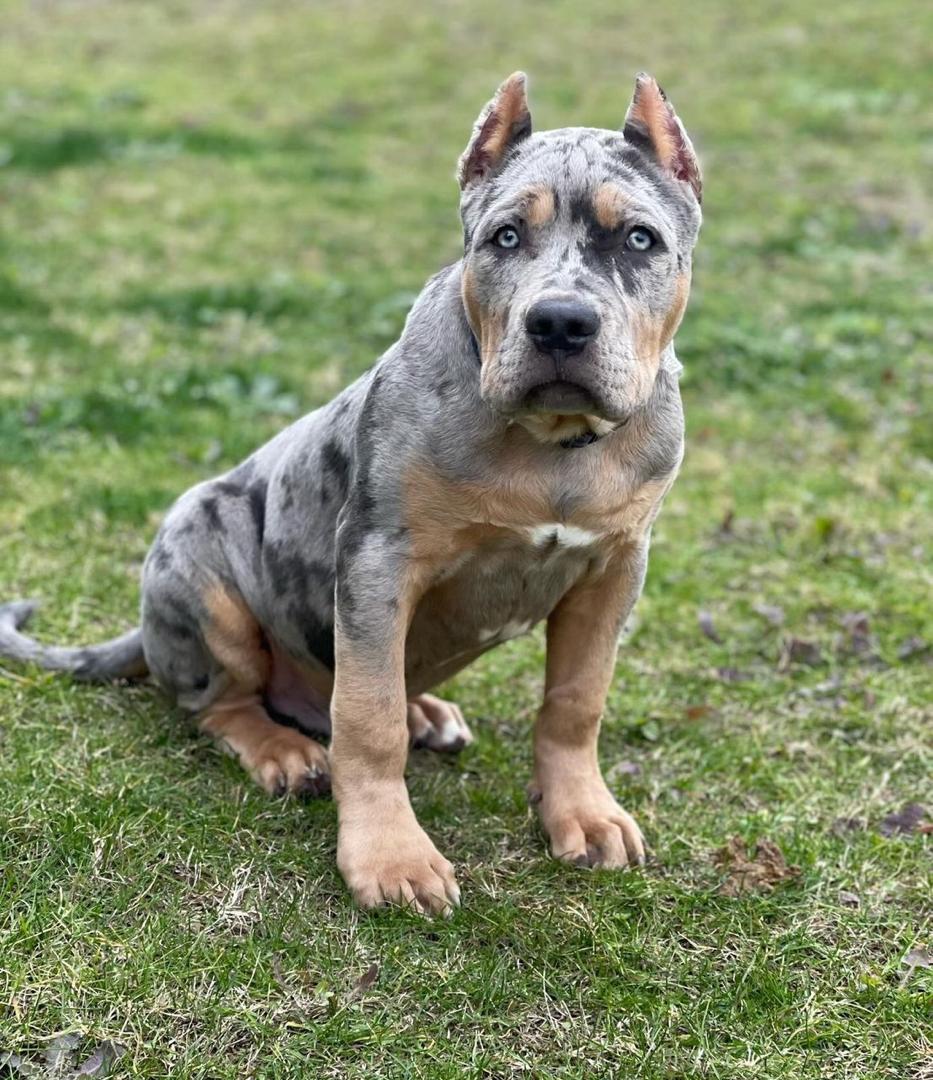
The other coats here this week
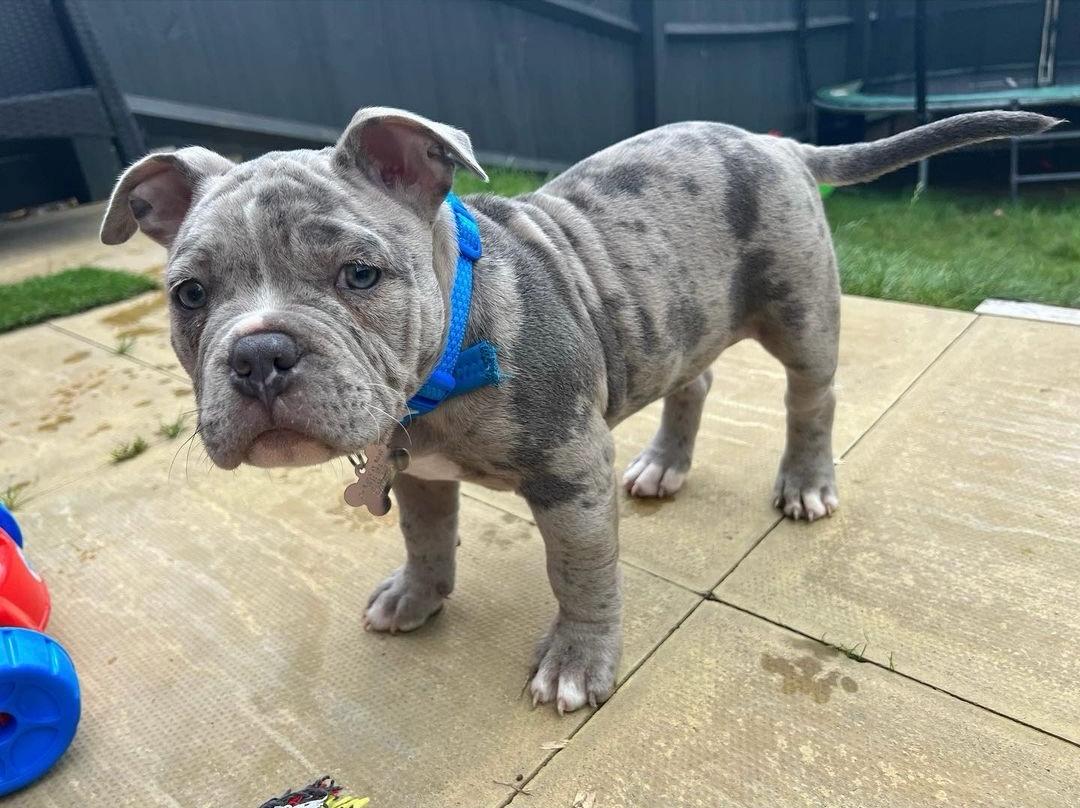
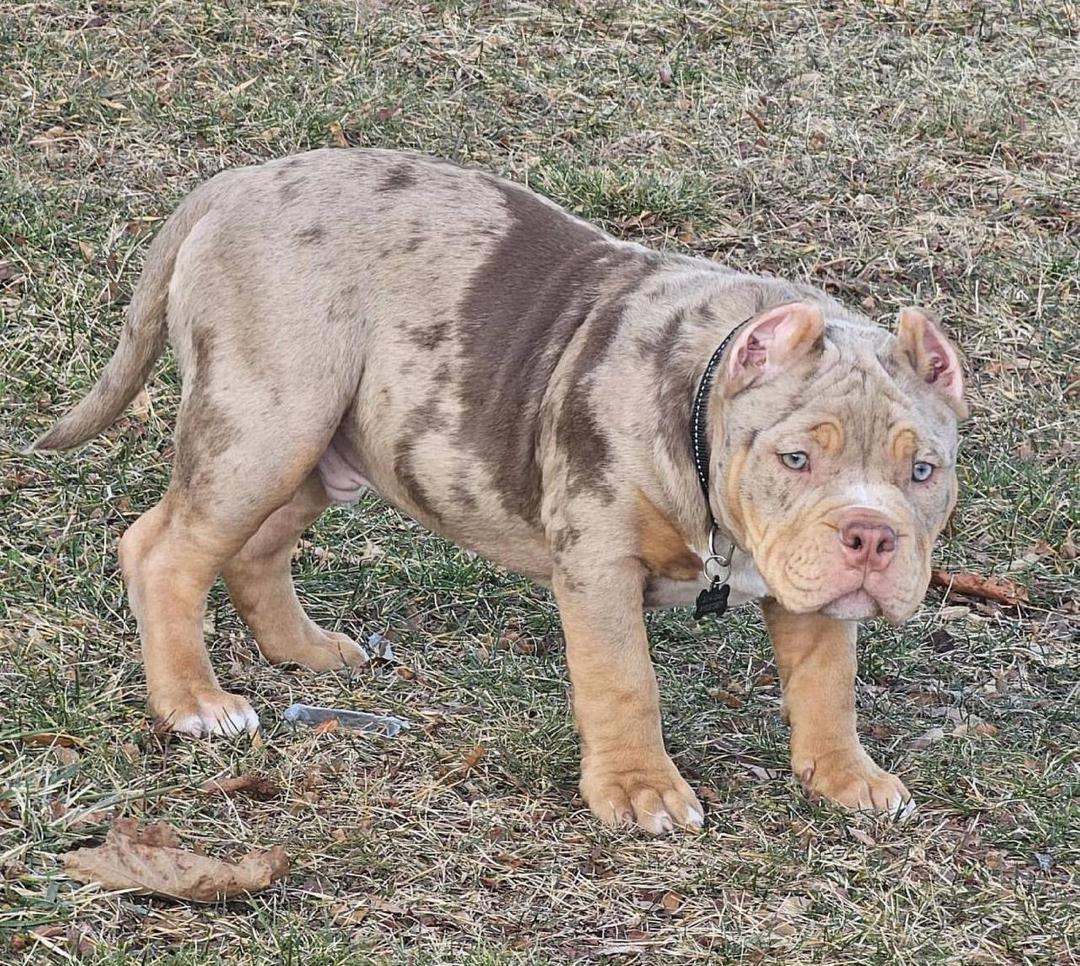
If tri color turns out not to be the one, here are the rest of the coats in the current group, closest to tri color first.
The genetics behind a tri color coat
The at allele at the A locus, which lays tan points on the cheeks, chest, legs and above the eyes, combined with white spotting from the S locus, sitting over whatever base colour the dog already carries. It is a pattern laid on top of a colour, not a colour in itself.
Reading a tri color, and what it gets muddled with
Confused with a tan point bicolor, which has the tan markings but none of the white. A true tri needs all three parts: the base colour, the tan points and real white markings. Some listings will count a small flash of white on the chest as the third colour, which is generous rather than accurate.
Where tri color sits in the breed
Tri colour is a pattern rather than a colour, which is exactly why it stacks on top of everything else, giving you blue tri, chocolate tri, lilac tri and the rest. The tan-point gene has always been sitting in the breed’s gene pool. It simply was not selected for until recently, which is worth remembering the next time a listing calls the pattern rare. It became fashionable, then it became pricey, and the dogs themselves did not change one bit. Its health profile is decided wholly by the base coat it lands on.
More widely produced now than it once was, so what used to read as unusual has become fairly ordinary, and the demand has softened to match, which is the normal arc for a coat that catches on. Its real interest is as a base for the stacked combinations rather than as a scarcity story in its own right.
To place it against its neighbours, here is how tri color compares on how scarce it really is and on how often buyers go looking for it. The coats beside it in the table are the ones people most often weigh against tri color.
| Coat | Rarity | Monthly searches |
|---|---|---|
| Tri Color | Uncommon | 320/mo |
| Blue Tri | Uncommon | 140/mo |
| Chocolate Tri | Rare | 320/mo |
| Fawn | Common | 170/mo |
| Black | Common | 170/mo |
What this coat means for the dog’s health
Nothing from the pattern itself. The risk a tri dog carries depends entirely on the base colour sitting under the tan points: a blue tri carries dilution risk, a chocolate tri carries none.
Beyond the coat, the rest is about the breed rather than the colour. The full picture is here, and you can see how every coat lines up.
I don’t screen or certify the parents and I won’t pretend otherwise. What I do stand behind: every puppy is examined by Bell Rock Veterinary Clinic before it leaves, it has had DHPP with the booster and the canine influenza shot by ten weeks and been dewormed between two and ten weeks, the written record travels with it, and you take it to your own vet inside the first week. Any dog I breed can come back to me at any point in its life.
Asking after a tri color puppy
Tell me roughly where you are and I’ll walk you through getting the puppy to you, whether that is me meeting you within a couple of hours of Sedona, ground transport, or a nanny who flies the puppy home in the cabin. I’ll also give you an honest read on whether this one fits your household.