
 3 available
Sedona, Arizona
Blue American Bully for Sale
Nothing blue in the current group, and I’d sooner tell you that than steer you toward a coat that is close and hope you don’t look twice. Everything I do have is further down.
I’ve no blue puppies in the current group. The coat is common in the breed, and the first thing worth saying is that scarcity and quality are two separate measurements. I’m Greg Harpson, I’ve bred American Bullies here since 2015, and coat is the last thing I select for, well behind temperament and behind structure.
Nothing blue standing this week
Coats turn over litter by litter, and dressing up a near match as the real thing helps nobody. Tell me the coat you’re set on and I’ll say plainly whether it’s on the way. What’s actually here is just below.
Here’s what is here instead
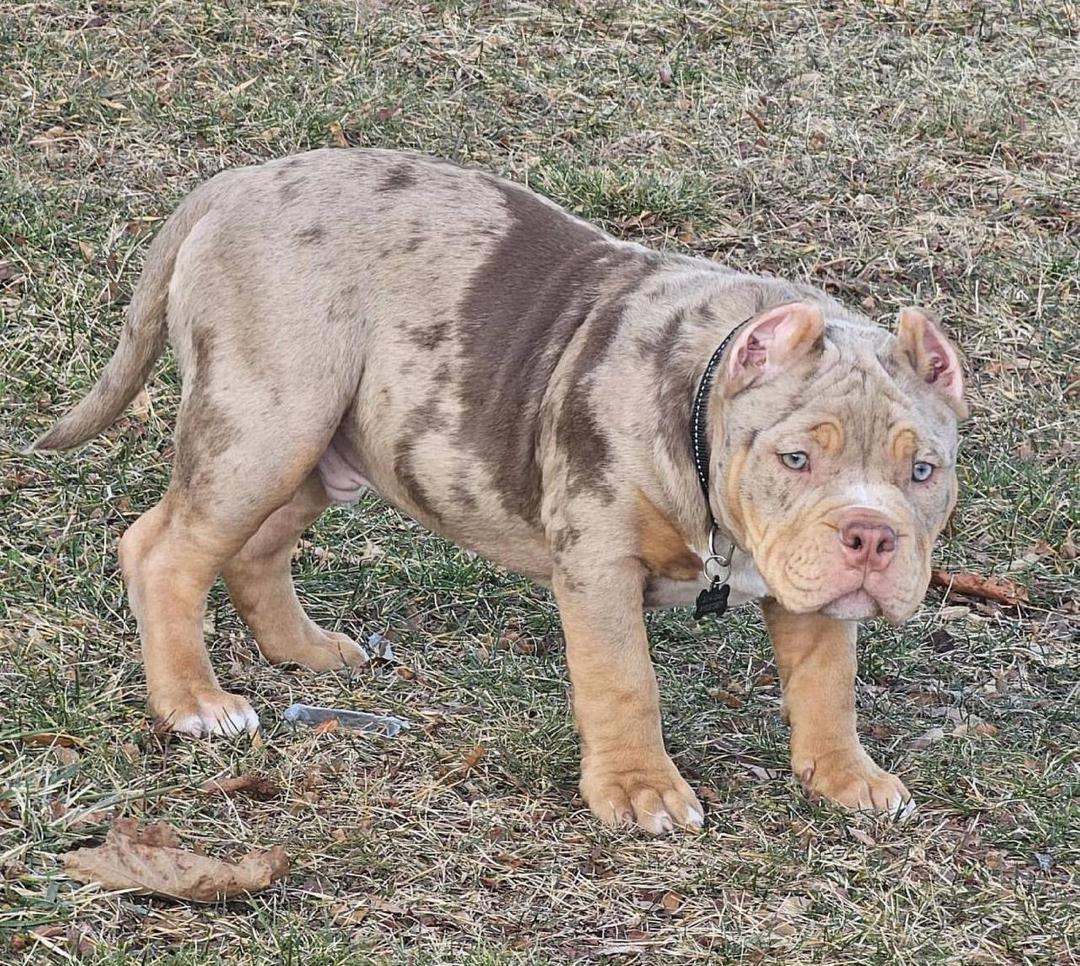
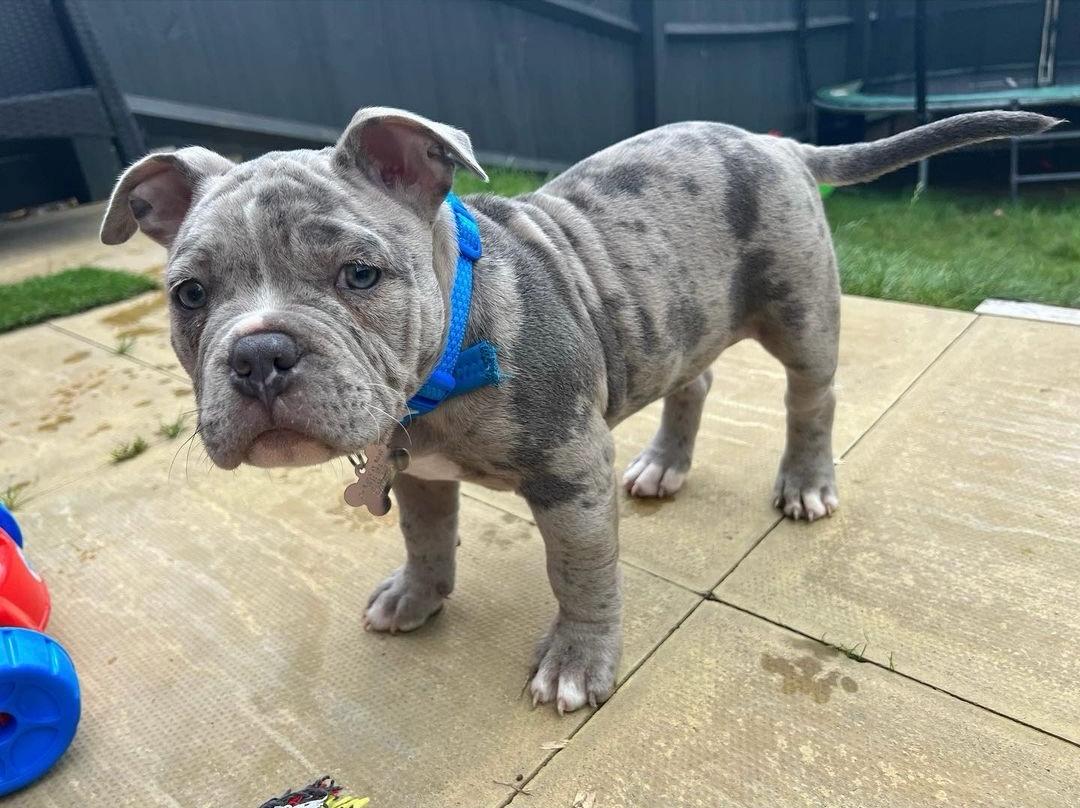
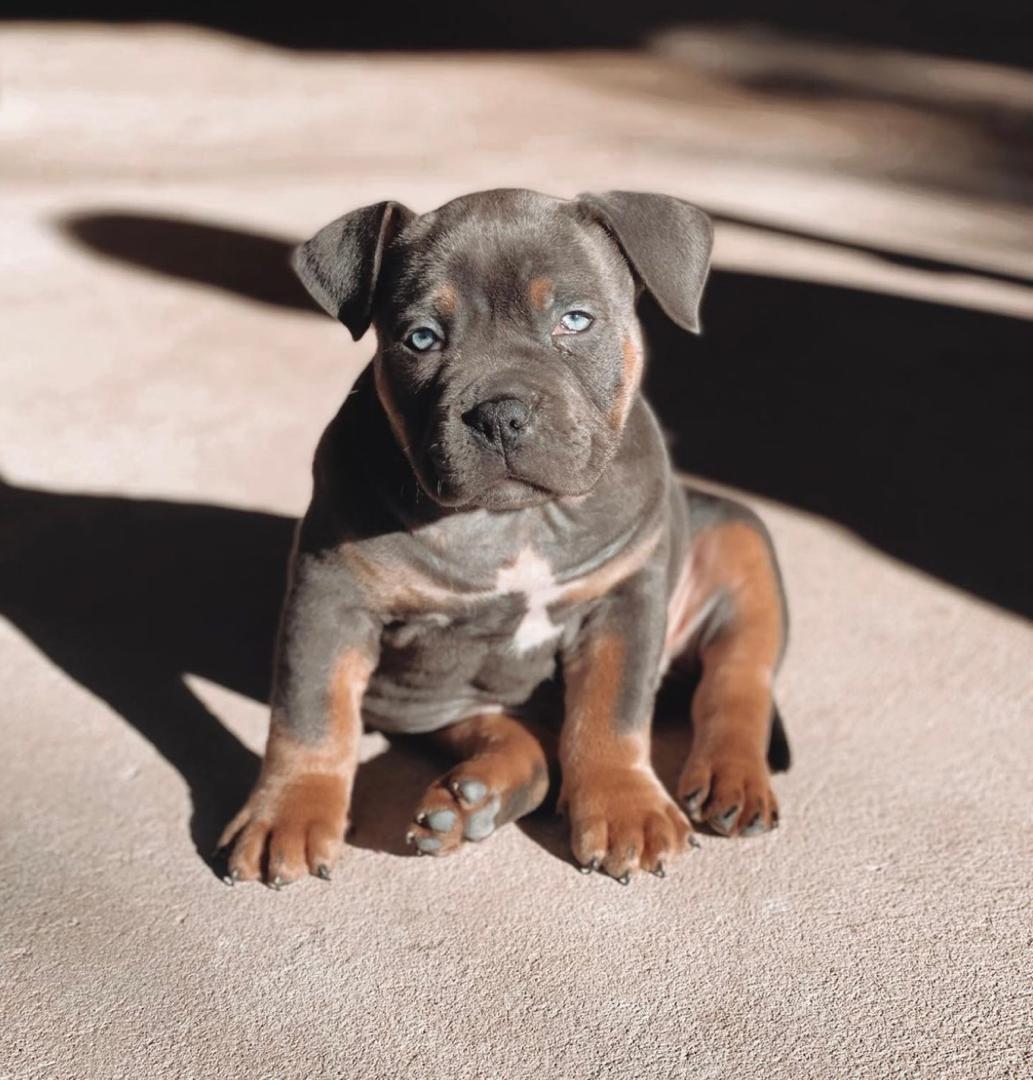
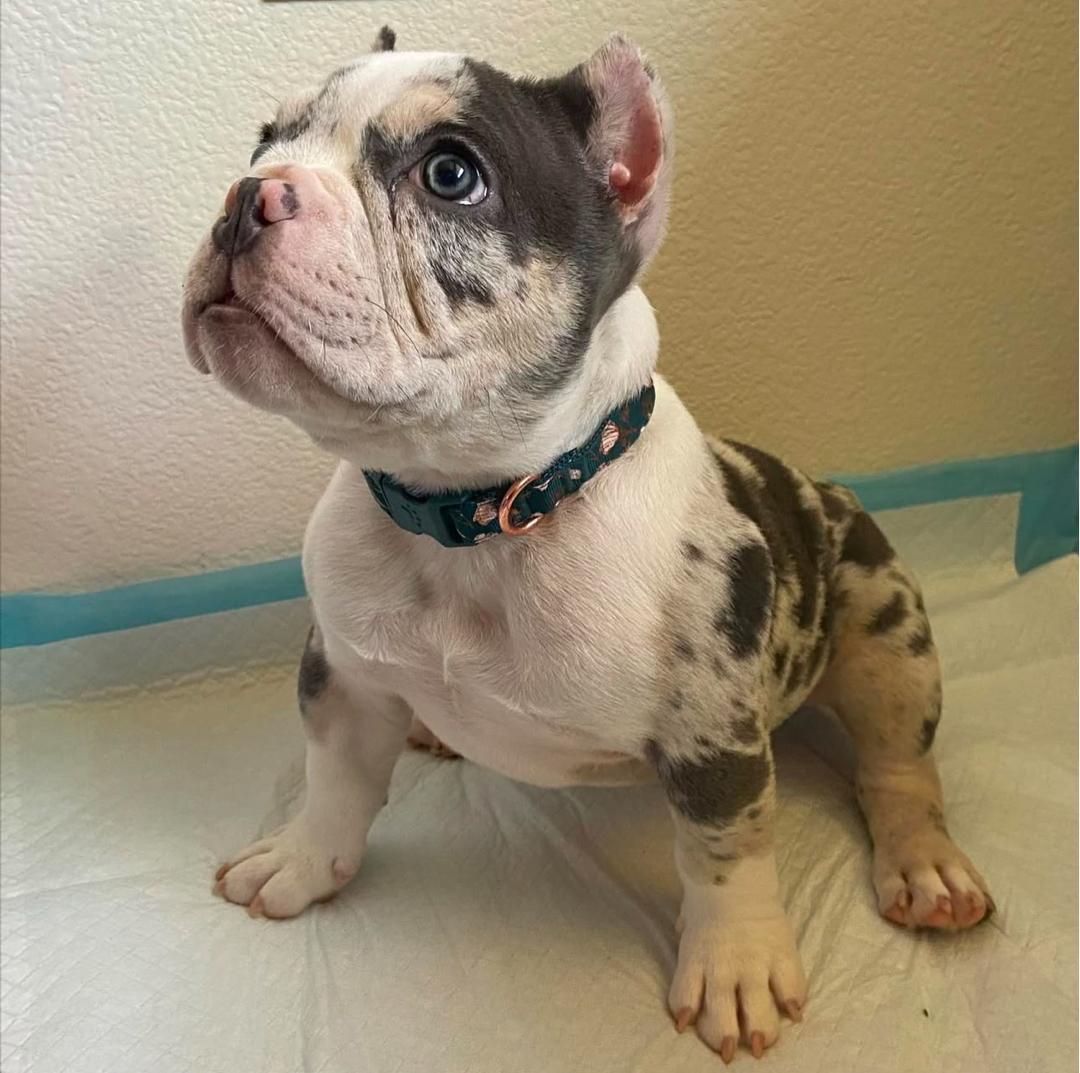
These coats are in the group today, and I’ve put the nearest thing to blue at the front so you can judge it for yourself.
The genetics behind a blue coat
A black dog carrying two copies of the recessive d allele at the D locus. The dilution acts on black pigment across the whole animal, which is why a true blue has grey nose leather, grey lips and grey eye rims, and often an amber eye, rather than the solid black you’d see on an undiluted dog.
Reading a blue, and what it gets muddled with
Routinely mixed up with blue fawn and with a plain black that has gone a little grey. The test is to look at the whole dog rather than just the body. A true blue is diluted everywhere, so the nose, lips and eye rims are grey too. If the coat reads slate but the nose is solid black, what you are looking at is not a blue.
Where blue sits in the breed
Blue is the coat most people are picturing when they picture this breed at all, and the useful thing to hold onto is that it is common, not scarce. If you came here expecting a rare colour, this isn’t one. That takes nothing away from how a good blue looks, and there’s no reason not to want one. Go in knowing two things: you are choosing it for the look, which is a perfectly good reason, and the dilution gene behind that look carries a documented coat condition that the glossiest listings almost never mention.
One of the commonest coats in the breed, which sits oddly against how it gets advertised, since it is marketed as something special far more often than its scarcity would justify. If a listing leans hard on the word rare for a blue, that tells you more about the seller than about the dog.
To place it against its neighbours, here is how blue compares on how scarce it really is and on how often buyers go looking for it. The coats beside it in the table are the ones people most often weigh against blue.
What this coat means for the dog’s health
Colour dilution alopecia. Hair in the diluted areas can turn brittle and thin, sometimes with recurring skin infections underneath, and it usually shows somewhere between six months and three years of age.
Plenty of diluted dogs carry a perfect coat their whole lives, so this is a thing to understand rather than a thing to fear. It isn’t painful and it isn’t dangerous. It is permanent once it appears, it needs managing, and it is tied specifically to the diluted coats, which is a detail the glossiest listings tend to leave out.
Beyond the coat, the rest is about the breed rather than the colour. The full picture is here, and you can see how every coat lines up.
I don’t screen or certify the parents and I won’t pretend otherwise. What I do stand behind: every puppy is examined by Bell Rock Veterinary Clinic before it leaves, it has had DHPP with the booster and the canine influenza shot by ten weeks and been dewormed between two and ten weeks, the written record travels with it, and you take it to your own vet inside the first week. Any dog I breed can come back to me at any point in its life.
Set on a blue?
Tell me what you’re after and I’ll say honestly whether it’s coming, rather than take a deposit against something I can’t promise.